Clinical neuroscience in everyday life
Explore our Instagram posts, LinkedIn articles and podcast episodes to better understand the links between brain functioning, cognition, emotions and behavior, and their implications in daily life.

Why do so many women find out they have ADHD at 35, 40, or 50?
In this episode of Brain Turbulence, Delphine Muller, a neurofeedback practitioner in Geneva, explores ADHD in women: its more subtle form, inner hyperactivity, social masking, and the physical and mental exhaustion that brings so many women to her office.
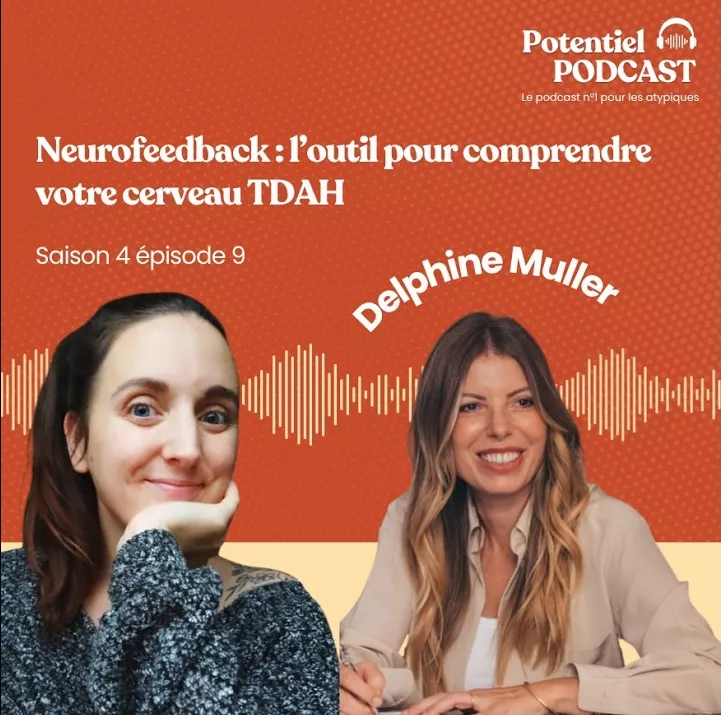
Neurofeedback: a tool for understanding your ADHD brain
In this video, Élodie Crépel and neurotherapist Delphine Muller decode the neuroscience behind attention disorders and emotional regulation. Together, we explain the neurophysiological functioning of ADHD, the impact of stress, lack of sleep, or screens on the brain, and why two people with the same diagnosis have unique brain profiles. A key exchange to work with your brain rather than against it.

ADHD: Emotional security is built when everything overflows
Imagine a child who just hit their brother. The parent steps in, separates them, and sets a boundary. The child can learn two different things. The first: "I am not allowed to hit." The second: "When I behave badly, I risk losing my parent's love." Ensuring their emotional safety means allowing them to learn the first without instilling the second.

The ADHD Brain: Genius of Memories, Chaos of the Present
Why do we forget what we were doing thirty seconds ago… while some memories from twenty years ago remain astonishingly clear? In this episode, we explore the “city of the brain”: Hippocampus, Amygdala, Basal Ganglia, and Prefrontal Cortex – and how their interactions explain the memory paradox in ADHD. A clear, lively journey, with practical tools to lighten your working memory and better understand how the ADHD brain works.

ADHD: Understanding the Diagnosis Before Explaining It
An ADHD diagnosis isn't just a clinical matter. It's also a matter of understanding. ADHD isn't just about observable behaviors. It relates to a specific neurodevelopmental functioning, especially attention and executive networks.